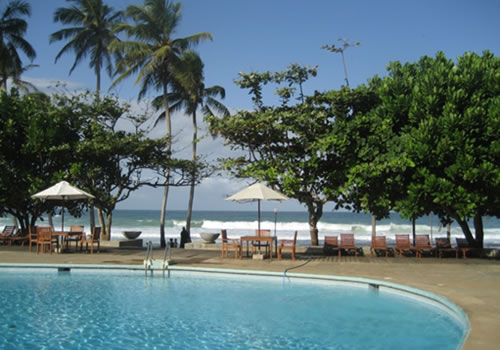
The island, with a population of just 20 million, feels like one big tropical zoo: elephants roam freely, water buffaloes idle in paddy fields and monkeys swing from trees. And then there’s the pristine coastline. The miles of sugary white sand flanked by bamboo groves that were off-limits to most visitors until recently are a happy, if unintended byproduct of the war.
Sunday, April 4, 2010
Amaya Reef - Hikkaduwa
Located in a quiet corner of the resort between the main building and the seaside restaurant. Seating at the bar or at tables beneath the palm trees. Serving a selection of cocktails, beers, wines, shooters and mixed drinks made with the strong local coconut liquor arrack.
- Swimming Pool
- Ayurvedic Spa Treatments
- Nightclub
- Tennis
- Table Tennis
- Beach Volleyball
- Basketball
- Badminton
- Surfing
- Water Polo
- Boat Rides
- Beach Rugby
- Indoor Games
- Galle City and Dutch Fort
- Martin Wickramasinghe Folk Museum , Koggala
- Stilt Fishing at Ahangama
- Sinharaja Rainforest
- Madu Ganga Safari in Balapitaya
- Turtle Hatchery in Kosgoda
- Watersports at Bentota
- Deep Sea Catamaran Fishing
- Train Tour to Matara
- Moonstone Mine at Meetiyagoda
- Room Service
- Foreign Currency Exchange
- Laundry Service
- IDD Facilities
- Safety Lockers
Thursday, April 1, 2010
Hikkaduwa , Surf Spot Characteristics
| alternative name | A-Frame | ||||||||||||||||||||||||||||||||||||||||||||||||||||||||||
| Surf Quality | |||||||||||||||||||||||||||||||||||||||||||||||||||||||||||
| wave quality | Standard (means good) | ||||||||||||||||||||||||||||||||||||||||||||||||||||||||||
| experience | all surfers | ||||||||||||||||||||||||||||||||||||||||||||||||||||||||||
| surf frequency | Don't know | ||||||||||||||||||||||||||||||||||||||||||||||||||||||||||
| Wave | |||||||||||||||||||||||||||||||||||||||||||||||||||||||||||
| type | reef-coral | ||||||||||||||||||||||||||||||||||||||||||||||||||||||||||
| direction | right and left | ||||||||||||||||||||||||||||||||||||||||||||||||||||||||||
| bottom | reef (coral,sharp rocks etc..) with sand | ||||||||||||||||||||||||||||||||||||||||||||||||||||||||||
| power | - fun | ||||||||||||||||||||||||||||||||||||||||||||||||||||||||||
| normal length | short (<50m) | ||||||||||||||||||||||||||||||||||||||||||||||||||||||||||
| good day | normal (50 to 150m) | ||||||||||||||||||||||||||||||||||||||||||||||||||||||||||
| Tide, Swell and Wind | |||||||||||||||||||||||||||||||||||||||||||||||||||||||||||
| swell direction | - West - SouthWest | ||||||||||||||||||||||||||||||||||||||||||||||||||||||||||
| wind direction | - East - NorthEast | ||||||||||||||||||||||||||||||||||||||||||||||||||||||||||
| swell size | starts working at less than 1m / 3ft and holds up to 2.5m+ / 8ft+ | ||||||||||||||||||||||||||||||||||||||||||||||||||||||||||
| tide position | all tides | ||||||||||||||||||||||||||||||||||||||||||||||||||||||||||
| tide movement | |||||||||||||||||||||||||||||||||||||||||||||||||||||||||||
| Author: Cam Spooner | |||||||||||||||||||||||||||||||||||||||||||||||||||||||||||
Friday, March 19, 2010
Snorkelling and Scuba Diving in Hikkaduwa

With its impressive coral reefs, clear blue water base and abundance of tropical fish, HIKKADUWA is recognised as one of the best places for snorkelling and diving on the Southwest coast (During the season between November & April) in Sri lanka.
An added advantage is the opportunity to Snorkel from the beach itself, in close proximity to where our well reputed partner Dive center is located. PADI diving instructors are also available throughout the season for training and certification as well for leading more experienced
divers to explore some of the country's best wreck and reef dive sites, including natural Limestone Caves. Surfing in Hikkaduwa
HIKKADUWA boasts of some of the best surfing spots in Sri Lanka , with a clear warm water base . The wave sizes range from 4-11 feet.
Hikkaduwa National Park


.jpg)

Hikkaduwa National Park is one of the two marine national parks in Sri Lanka. The national park contains a fringing coral reef of high degree of biodiversity. The area was declared a wildlife sanctuary on May 18, 1979, and then on August 14, 1988, upgraded to a nature reserve with extended land area. The growth of the number of visitors in the next 25 years increased the degradation of the coral reef. To reduce the effects to the ecosystem, the reef was declared a national park on September 19, 2002.
Coral reef
Hikkaduwa coral reef is a typical shallow fringing reef with an average depth of around 5 metres (16 ft). The coral reef reduces the coastal erosion and forms a natural breakwater. The coast of the national park extends four km. Generally the coast is narrow, ranging from 5-50 m according to the climatic conditions of the year. Scuba diving is a popular recreation here.
Physical features
The national park situated in the wet zone and receives a 2,000 millimetres (79 in) of annual rainfall. The rain is received in both southewestern and northeastern monsoon seasons, in April-June and September-November respectively.[1] Inter-monsoon season is a dry period which is considered the best season to visit the park. The temperature of the water ranges from 28.0°-30.0°C while the mean annual temperature is 27°C of the atmosphere. Flora and fauna
Flora and fauna
Foliaceous Montipora species dominate the coral reef. Encrusting and branching species are also present. Faviidae and Poritidae corals are contained in the inshore areas of the reef in massive colonies. Staghorn, elkhorn, cabbage, brain, table and star corals are all present in the reef. Corals of 60 species belonging to 31 genera are recorded from the reef. The reef also recorded over 170 species of reef fish belonging to 76 genera.
Seagrass and marine algae belonging to genera Halimeda and Caulerpa are common in the seabed depth ranging from 5-10 m. Seagrasses provide habitat to Dugong and sea turtles. Some species of prawns feed on the seagrass. Eight species of ornamental fishes also inhabit the reef, along with many vertebrates and invertebrates including crabs, prawns, shrimps, oysters and sea worms. Porites desilveri is an endemic coral species of Sri Lanka. Chlorurus rhakoura and Pomacentrus proteus are two reef fish species confined to Sri Lanka. Blacktip reef shark are found along the outer slope of the reef. Three sea turtles which have been categorized threatened visit the coral reef: the hawksbill turtle, green turtle, and Olive Ridley.